

Why is Retail Annotation Important?
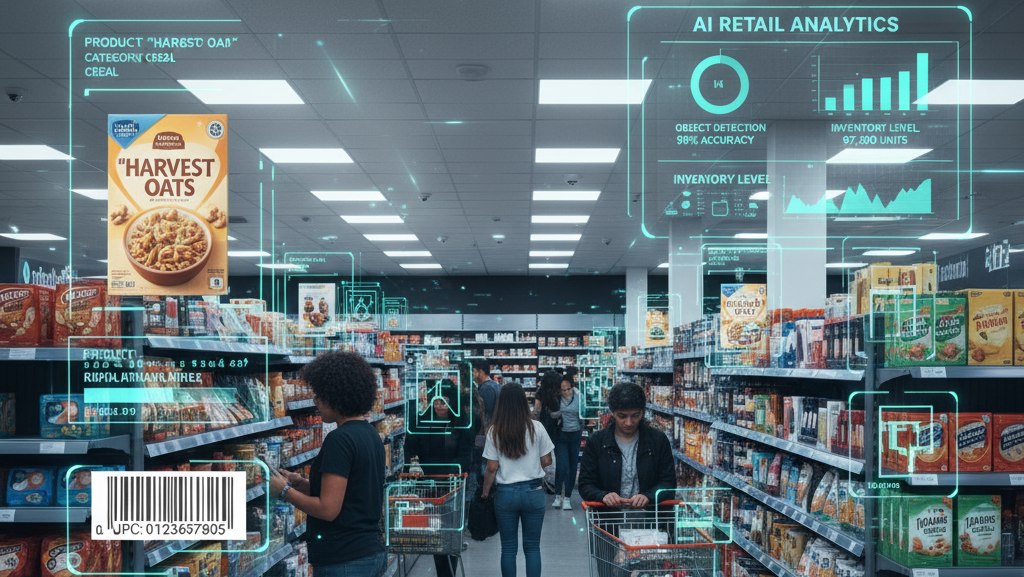
Accurate retail annotation helps AI models:
- Detect and classify products on shelves for planogram compliance and stock monitoring.
- Recognize customer movement and engagement patterns through in-store cameras.
- Enable automated checkout systems by identifying items at point-of-sale counters.
- Support inventory management and supply chain efficiency using annotated images and IoT data.
- Improve store design and marketing strategies based on shopper analytics.
High-quality retail annotation ensures that AI systems can process real-world retail data accurately, driving automation, reducing human error, and improving operational efficiency across physical and online stores.
Types of Retail Annotation
Image and Video Annotation
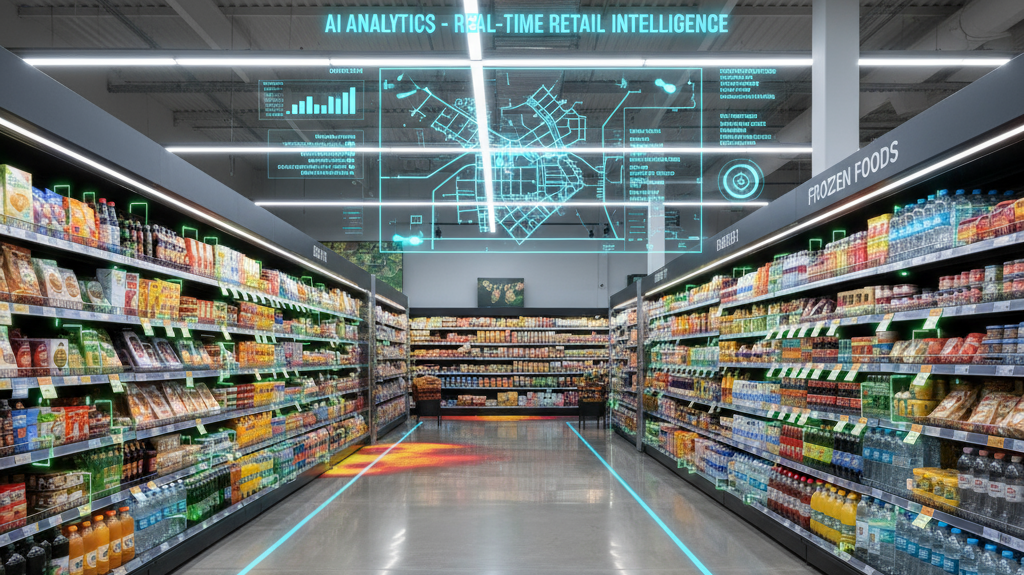
In retail, image and video annotation plays a key role in training AI to understand in-store visuals. Bounding boxes and polygons label products, shelves, and packaging, while semantic segmentation distinguishes aisles, checkout counters, and displays. Frame-by-frame video annotation tracks customer movements, enabling insights into footfall patterns and queue management. These annotations empower AI systems to improve store layout, monitor stock levels, and enhance overall operational efficiency through real-time visual intelligence.
Text Annotation
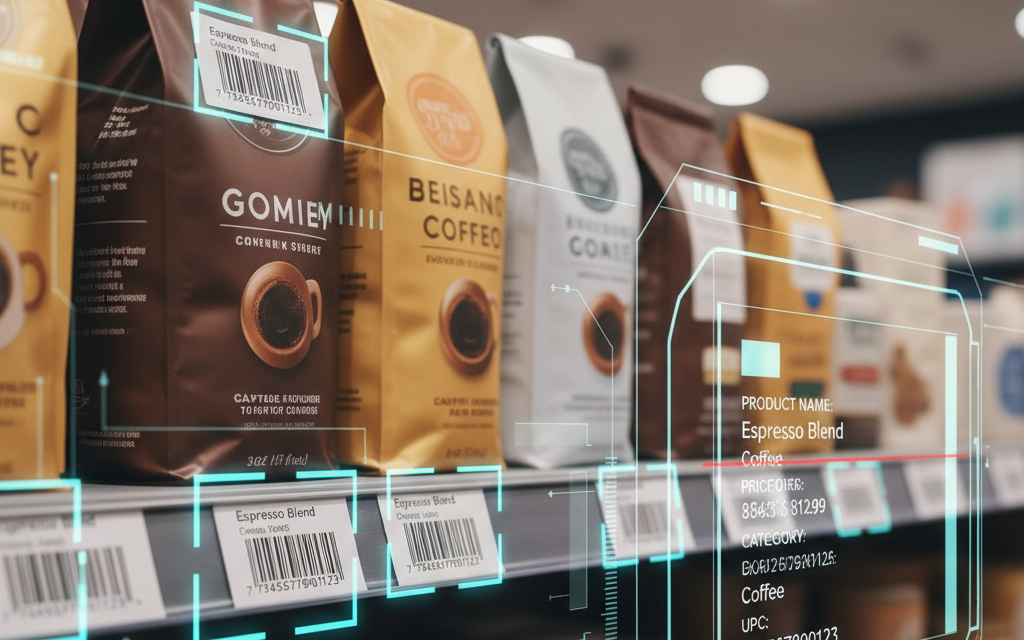
Text annotation in retail focuses on extracting and structuring written data from product labels, barcodes, price tags, and receipts. Using Optical Character Recognition (OCR) and entity tagging, AI systems identify product names, prices, and categories with precision. This process streamlines billing, improves product search accuracy, and automates inventory management. Text annotation ensures seamless integration between physical and digital retail operations, supporting smarter checkout experiences and efficient catalog management across omnichannel retail environments.
Audio Annotation
Audio annotation enables AI to understand and analyze spoken interactions in retail environments such as customer support and call centers. Through speech-to-text conversion, sentiment analysis, and intent detection, AI can interpret tone, emotion, and purpose in conversations. These annotations enhance customer experience by enabling virtual assistants, automating feedback analysis, and improving service quality. By converting raw audio data into actionable insights, audio annotation supports better decision-making and fosters personalized engagement in modern retail operations.

Retail Data Annotation Services for AI and E-commerce
Advanced Data Annotation for Retail AI
Artificial intelligence and computer vision are transforming the retail industry through automated product recognition, intelligent shelf monitoring, inventory tracking, visual search, and customer behavior analytics.
These technologies depend on accurately labeled retail datasets to identify products, recognize packaging, understand shelf layouts, detect stock availability, and analyze activities within retail environments.
Annotation World provides retail data annotation services to support the development of AI-powered retail and e-commerce applications.
We help prepare structured training datasets from product images, store photographs, CCTV footage, product catalogs, receipts, packaging labels, and other retail data sources.
From product image annotation and SKU-level labeling to shelf segmentation, barcode recognition, and video tracking, our annotation solutions support machine learning and computer vision projects across modern retail environments.
Our Retail Data Annotation Services
1. Product Image Annotation
Product image annotation involves identifying and labeling products, packaging, and other retail objects within images.
Our product image annotation workflows can include:
- Product bounding box annotation
- Product classification
- Product category identification
- Packaging recognition
- Product attribute labeling
- Logo and brand identification
- Product instance segmentation
- Image-level product tagging
These datasets can support AI-powered product recognition, catalog automation, and visual search applications.
2. Product Recognition and SKU Annotation
Retail AI systems often need to recognize individual products, including different brands, packaging designs, sizes, and product variants.
SKU-level annotation helps create structured training datasets for product detection and recognition models.
Common annotation tasks include:
- SKU-level product identification
- Brand and product category labeling
- Product variant classification
- Packaging size and type identification
- Product attribute extraction
- Similar product differentiation
- Multi-product image annotation
These datasets can support automated product recognition, retail shelf analytics, and inventory management applications.
3. Shelf Monitoring and Product Detection
Shelf monitoring annotation involves identifying products, shelves, empty spaces, and product placement within retail store images and videos.
Our annotation workflows can include:
- Product detection on shelves
- Shelf boundary annotation
- Empty shelf space labeling
- Product facing identification
- Product position annotation
- Out-of-stock region labeling
- Misplaced product identification
- Shelf occupancy classification
These annotated datasets can support AI applications designed for shelf availability monitoring and retail inventory analytics.
4. Planogram Compliance Annotation
Planograms define how products should be arranged and displayed on retail shelves.
Planogram-related annotation helps prepare datasets for computer vision models that compare actual shelf arrangements against defined merchandising layouts.
Annotation tasks can include:
- Product placement identification
- Shelf zone annotation
- Product facing count labeling
- Brand and category identification
- Promotional display annotation
- Incorrect product placement labeling
- Shelf arrangement classification
These datasets can support automated merchandising audits and retail compliance analysis.
5. Inventory and Stock Detection
Inventory annotation involves labeling products, stock quantities, and visible inventory conditions within retail environments.
Common tasks include:
- Product presence detection
- Empty shelf identification
- Stock availability classification
- Product counting
- Inventory condition labeling
- Warehouse object annotation
- Damaged packaging identification
- Product movement tracking
These datasets can support AI-based inventory monitoring, stock visibility, and warehouse automation systems.
6. Barcode and Price Tag Annotation
Retail products contain barcodes, QR codes, price tags, and packaging text that AI systems need to identify and process.
Our annotation workflows can include:
- Barcode localization
- QR code detection
- Price tag bounding boxes
- Product label annotation
- OCR text region labeling
- Product code identification
- Price and discount field annotation
- Packaging text extraction labeling
These datasets can support automated checkout, product identification, and retail document processing applications.
7. E-commerce Product Annotation
E-commerce platforms rely on structured product information and visual datasets to improve product discovery, categorization, and search experiences.
Our e-commerce annotation workflows can include:
- Product image classification
- Product category labeling
- Product attribute annotation
- Clothing and accessory labeling
- Product segmentation
- Background and foreground separation
- Product feature tagging
- Visual similarity dataset labeling
These annotations can support product catalog automation, recommendation systems, and AI-powered visual search.
8. Retail Video Annotation
Retail video annotation involves identifying and labeling products, people, objects, and activities across consecutive video frames.
Common tasks include:
- Person and shopper detection
- Customer movement tracking
- Queue and checkout monitoring
- Product interaction labeling
- Shopping cart detection
- Object tracking
- Store activity classification
- Temporal event annotation
These datasets can support computer vision models used in retail analytics, store operations, and automated checkout applications.
9. Customer Behavior and Activity Annotation
Customer behavior annotation involves labeling observable activities and interactions within retail environments.
Project-specific annotation categories can include:
- Customer movement
- Product browsing
- Shelf interaction
- Shopping cart interaction
- Queue formation
- Store zone occupancy
- Customer activity classification
- Dwell time event labeling
These datasets can support retail analytics and customer experience research.
Video-based customer behavior datasets should be processed with appropriate privacy safeguards and data minimization requirements.
10. Checkout and POS Annotation
Checkout annotation helps prepare datasets for AI systems that identify products and interactions around retail checkout counters.
Annotation tasks can include:
- Product identification at checkout
- Individual item localization
- Overlapping product separation
- Barcode and label localization
- Checkout object detection
- Shopping basket item annotation
- Product interaction labeling
- Checkout event classification
These datasets can support automated checkout, smart retail counters, and computer vision-based billing applications.
11. Retail Text and Audio Annotation
Retail AI applications also use textual and audio data from product catalogs, customer reviews, support conversations, and voice-based shopping systems.
Text annotation can include:
- Product description classification
- Product attribute extraction
- Customer review sentiment labeling
- Search intent classification
- Named Entity Recognition
- Product category identification
- Receipt and invoice text annotation
Audio annotation can include:
- Speech transcription
- Speaker identification
- Customer intent labeling
- Sentiment annotation
- Voice command classification
- Retail customer support conversation labeling
These datasets can support NLP, speech recognition, conversational AI, and customer service automation.
Retail AI and Machine Learning Applications
Accurately labeled retail datasets can support several AI-powered applications.
Automated Product Recognition
Annotated product images help train computer vision models to recognize products, packaging, brands, and product variants.
Smart Shelf Monitoring
Labeled shelf images can support models that identify product placement, empty shelf spaces, and stock availability.
Inventory Management
Annotated product and warehouse imagery can support automated inventory detection, product counting, and stock monitoring.
Planogram Compliance
Structured product and shelf annotations can support AI systems designed to compare actual product placement with merchandising requirements.
Visual Search and Product Discovery
Annotated product images and attributes can help train systems that identify visually similar products and improve image-based search.
Automated Checkout
Product detection and classification datasets can support computer vision applications that identify items during checkout.
Retail Store Analytics
Annotated video datasets can support people counting, queue monitoring, customer movement analysis, and store activity classification.
E-commerce Catalog Automation
Structured product images, descriptions, and attributes can support product categorization and automated catalog management.
Retail Annotation Techniques
Different retail AI applications require different annotation techniques depending on the dataset and model objectives.
Bounding Box Annotation
Bounding boxes identify and locate individual products, price tags, barcodes, shelves, and other objects within images.
Polygon Annotation
Polygon annotation outlines irregular product shapes and specific regions of interest for more detailed object localization.
Semantic Segmentation
Semantic segmentation assigns labels to individual pixels to distinguish products, shelves, checkout areas, floors, and other retail elements.
Instance Segmentation
Instance segmentation identifies individual products separately, even when several similar products appear together.
Image Classification
Image classification assigns categories to product images, packaging, retail scenes, and other visual data.
Keypoint Annotation
Keypoint annotation identifies specific points of interest on products or objects when required by the target computer vision model.
Video and Object Tracking Annotation
Video annotation identifies objects and activities across consecutive frames, while object tracking maintains consistent identifiers for individual objects.
Our Retail Data Annotation Workflow
A structured annotation workflow helps maintain consistency across retail images, videos, product catalogs, and documents.
- Project Assessment – Review your retail data, product categories, annotation objectives, dataset size, and project requirements.
- Annotation Guidelines – Define SKU categories, object labels, product attributes, shelf rules, and annotation specifications.
- Data Preparation – Organize and prepare supplied product images, shelf photographs, videos, catalogs, and documents.
- Annotation Execution – Perform the agreed image, video, text, audio, and product annotation tasks.
- Quality Assurance – Review annotations for consistency, completeness, and adherence to project guidelines.
- Final Delivery – Deliver structured annotated datasets in the mutually agreed output formats.
Quality Assurance and Data Security
Retail datasets can contain sensitive business information, proprietary product catalogs, customer interactions, and store surveillance footage.
Our project workflows should define appropriate quality and data handling requirements, including:
- Standardized annotation guidelines
- Consistent product and SKU labeling
- Annotation completeness checks
- Review of product boundaries and attributes
- Object tracking consistency checks
- Restricted dataset access
- Secure file transfer procedures
- Agreed data retention policies
- Final output verification
For customer images, videos, and other potentially identifiable data, privacy requirements should be agreed upon before annotation begins.
Why Choose Annotation World?
Annotation World provides data annotation solutions for organizations developing AI and machine learning applications across different industries.
Our retail annotation capabilities can support different data types and project requirements, including:
- Product image annotation
- SKU-level product recognition
- Shelf and inventory annotation
- Planogram compliance labeling
- Barcode and price tag annotation
- E-commerce product annotation
- Retail video annotation
- Customer activity labeling
- Text and audio annotation
We focus on structured annotation guidelines, project-specific workflows, and quality review to help prepare datasets for retail AI and e-commerce applications.
Whether you are developing automated shelf monitoring, product recognition, visual search, smart checkout, or retail analytics systems, our team can discuss an annotation workflow aligned with your project requirements.
Frequently Asked Questions
What is retail data annotation?
Retail data annotation is the process of labeling images, videos, text, audio, and product information to train AI and machine learning models for retail and e-commerce applications.
What is product recognition annotation?
Product recognition annotation involves labeling products, brands, packaging, and product variants in images to prepare training datasets for computer vision models.
What is SKU-level annotation?
SKU-level annotation identifies individual stock keeping units and their product categories or variants within retail images and other datasets.
What is shelf monitoring annotation?
Shelf monitoring annotation involves labeling products, shelf spaces, product placement, and stock conditions to train AI systems for retail shelf analytics.
What is planogram compliance annotation?
Planogram compliance annotation involves labeling product positions, shelf arrangements, and merchandising elements to prepare datasets for automated retail layout analysis.
Can retail data annotation support inventory management?
Yes. Annotated product and shelf images can support AI applications involving product detection, stock visibility, product counting, and inventory monitoring.
What types of data can be annotated for retail AI?
Common data sources include product images, shelf photographs, store surveillance videos, product catalogs, packaging labels, barcodes, receipts, and customer support recordings.
What annotation techniques are used in retail?
Common techniques include bounding boxes, polygons, semantic segmentation, instance segmentation, image classification, keypoint annotation, and video object tracking.
Can Annotation World support e-commerce product annotation?
Yes. E-commerce annotation workflows can include product classification, image labeling, product attributes, segmentation, and visual similarity dataset preparation, depending on project requirements.
How can I get started with retail data annotation services?
Contact Annotation World with your product images, shelf photographs, video datasets, product categories, approximate volume, and preferred output format. Our team can discuss a suitable annotation workflow for your retail AI project.
Get Started with Retail Data Annotation
Building an AI-powered retail or e-commerce solution that requires accurately labeled training data?
Annotation World can help prepare product images, shelf photographs, store videos, product catalogs, and other retail datasets for computer vision and machine learning applications.
Contact our team to discuss your retail data annotation requirements and project scope.