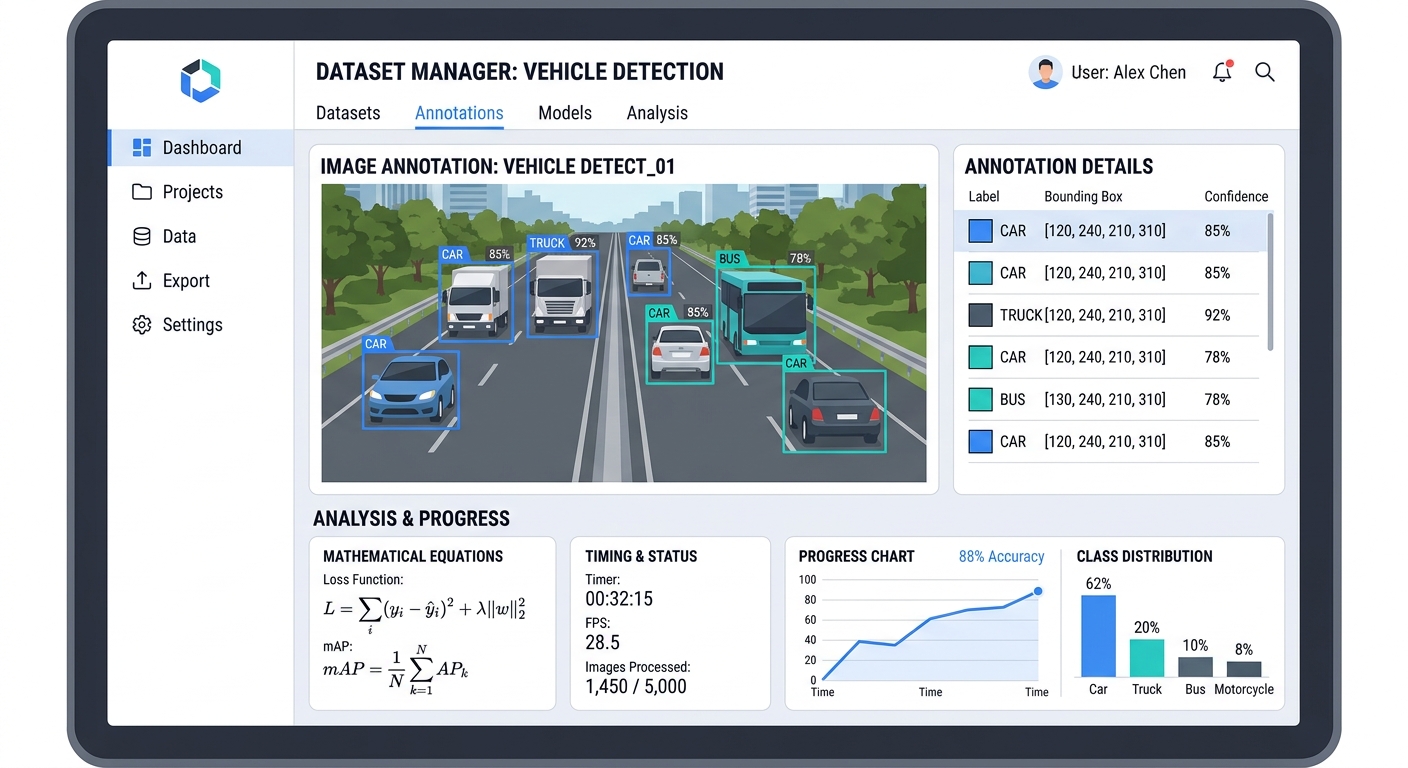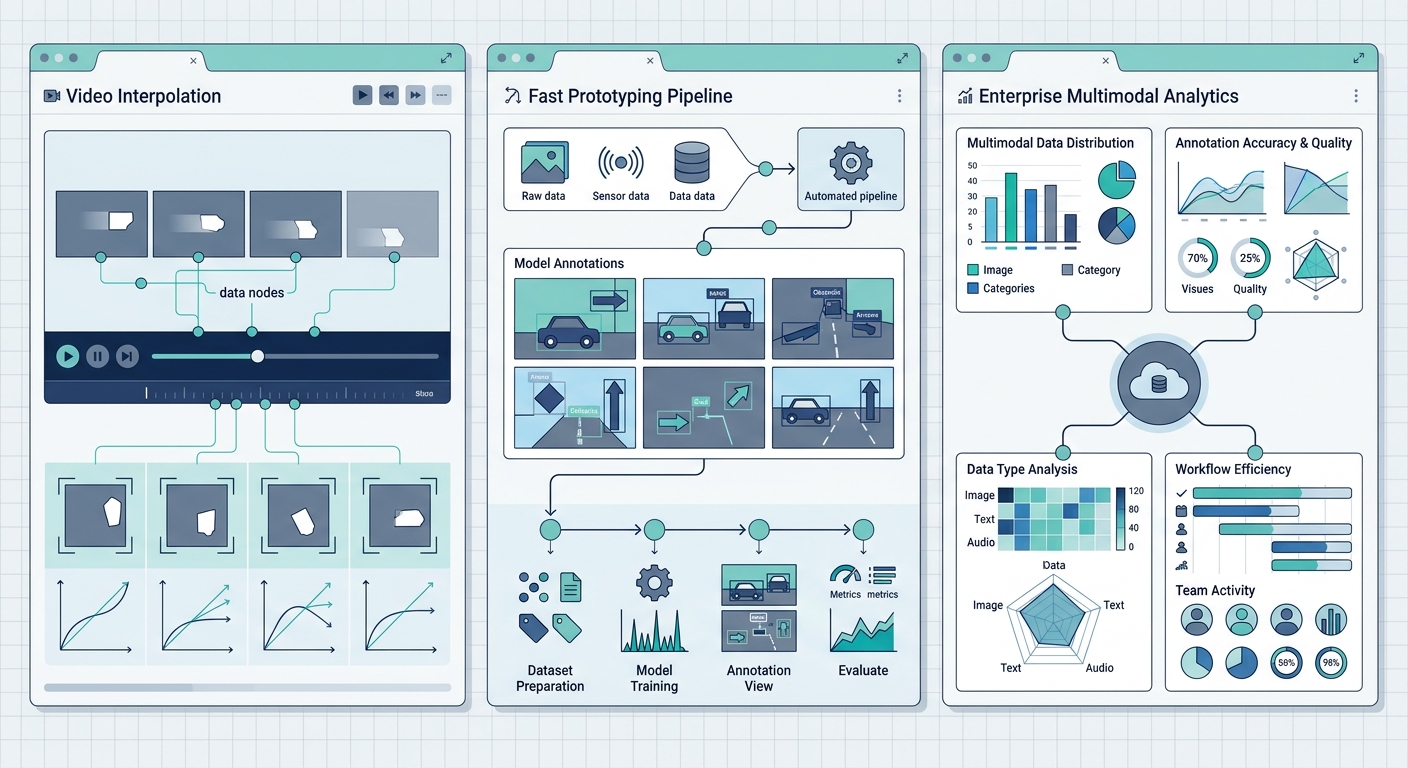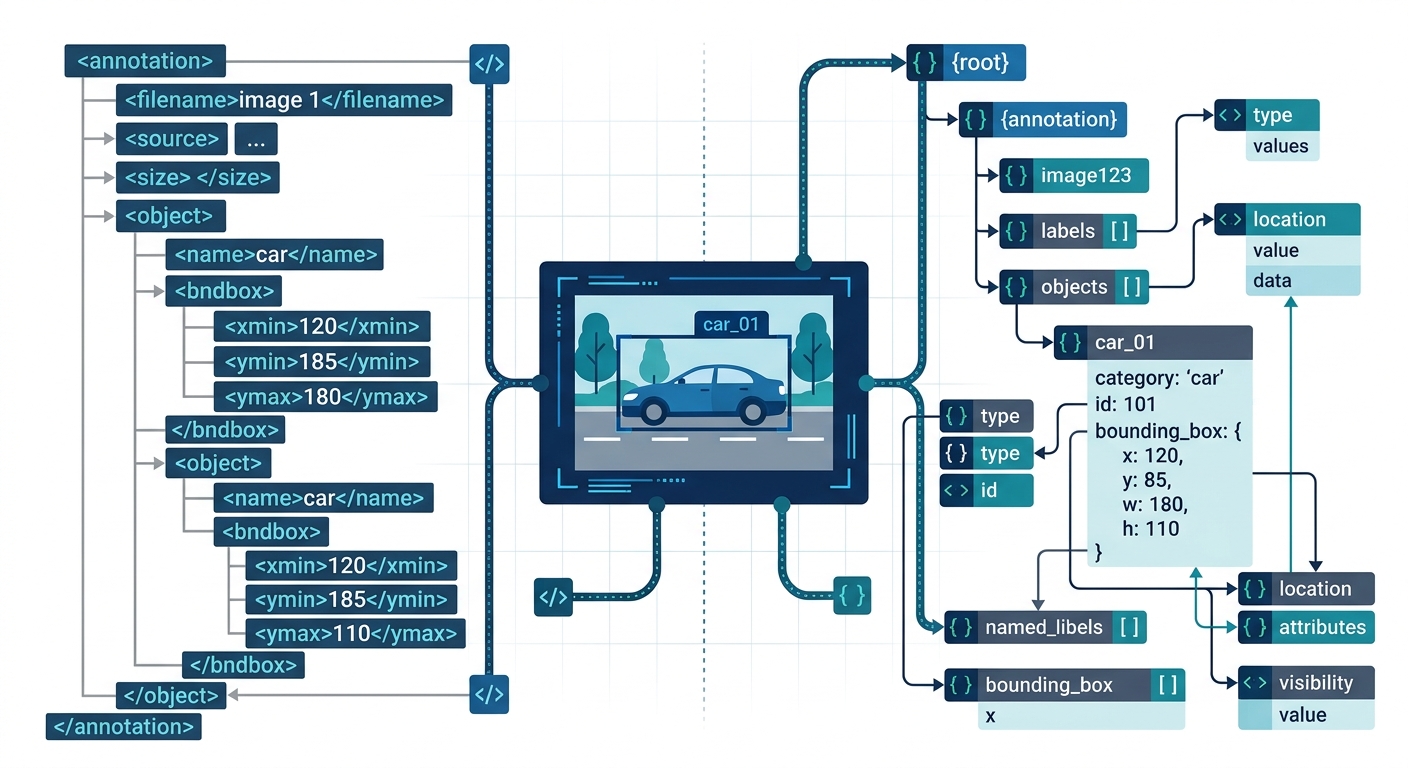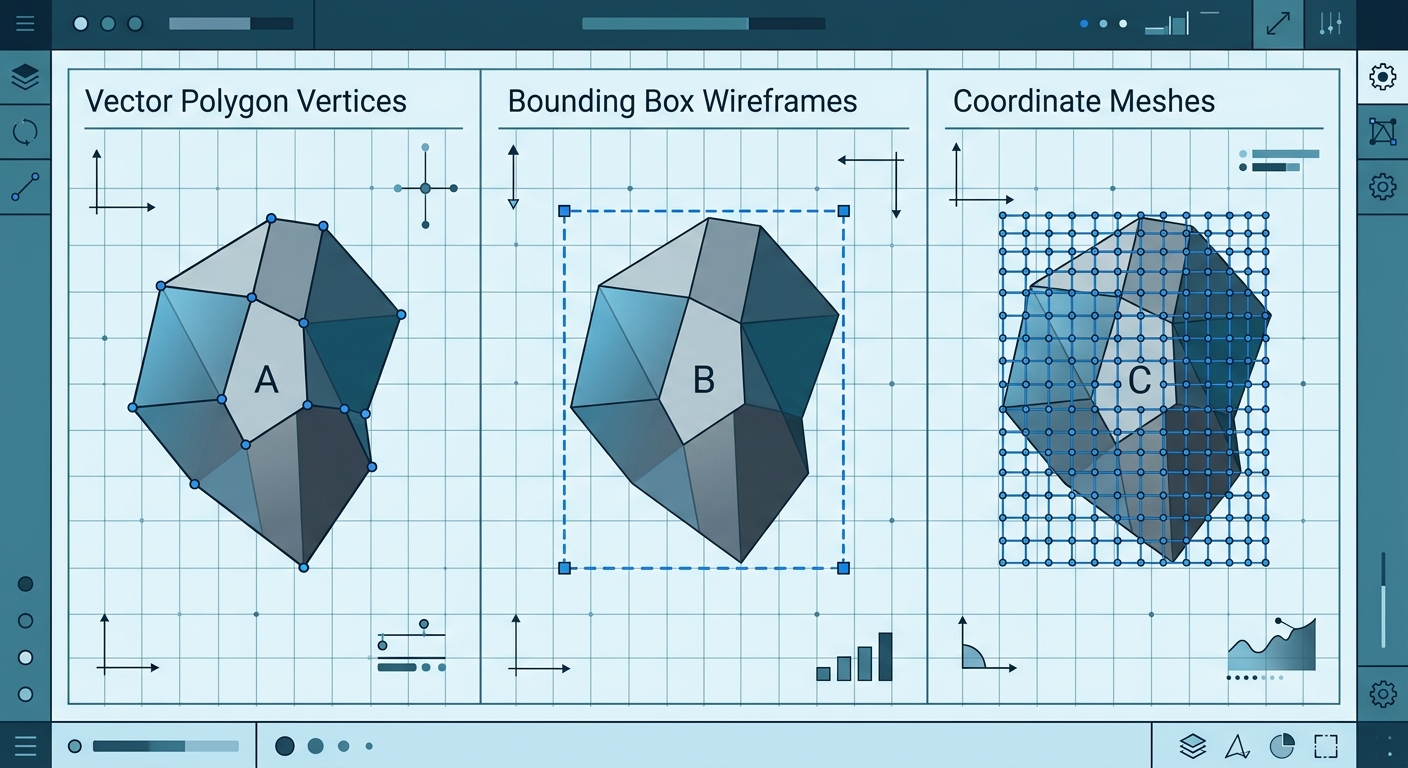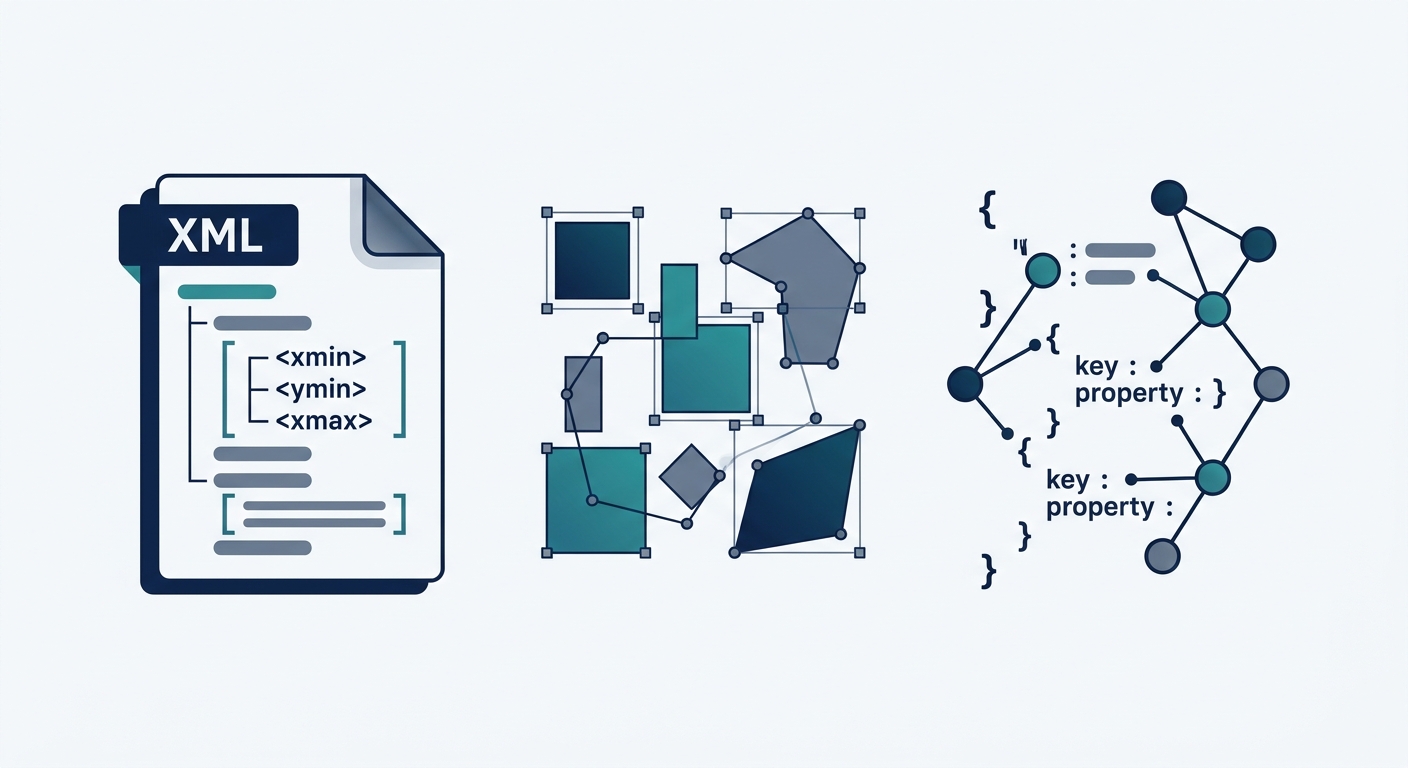
Building high-performance computer vision models requires vast volumes of pixel-precise training data. However, manual pixel-level annotation remains one of the most expensive and time-consuming bottlenecks in the machine learning lifecycle. To accelerate dataset creation, computer vision teams are rapidly adopting Meta’s Segment Anything 2 (SAM 2) to automate mask generation.
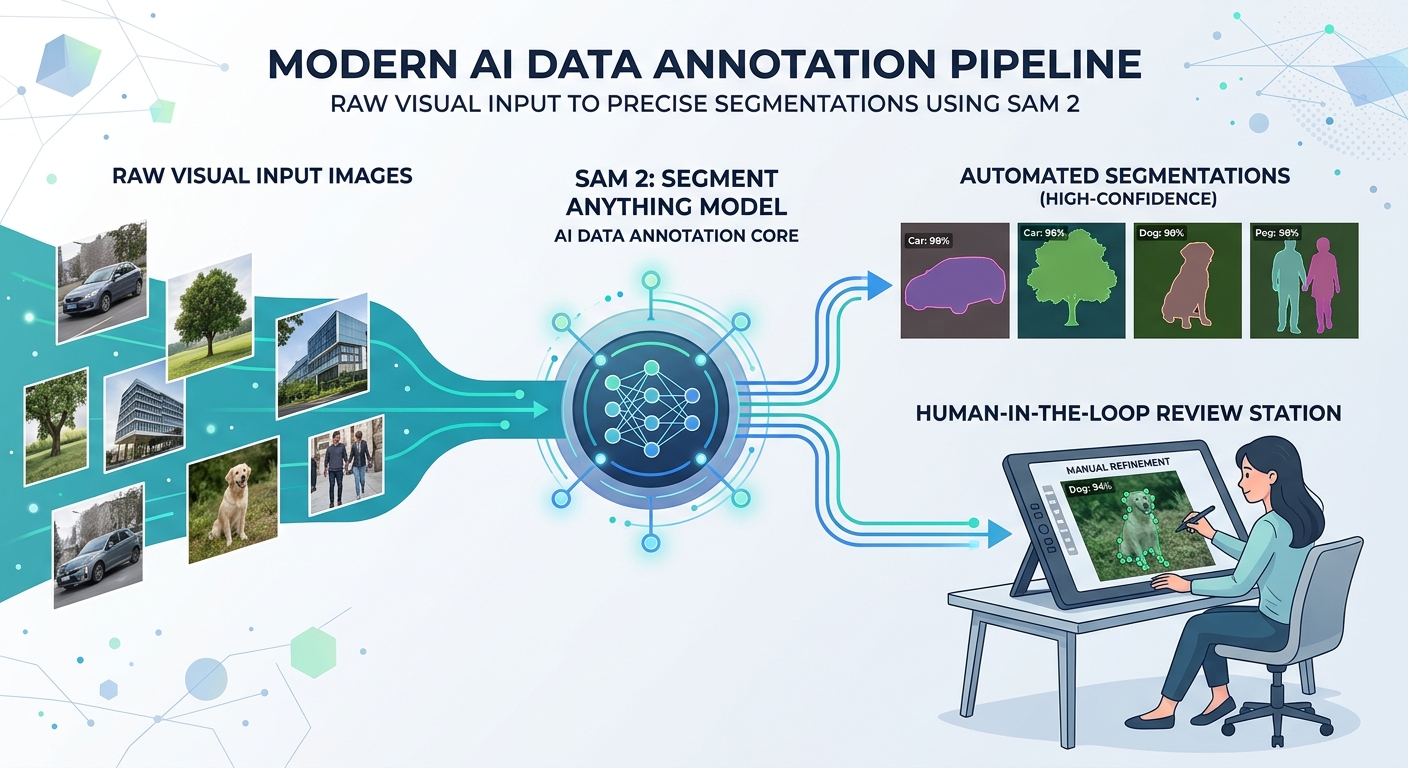
While public demos showcase instant zero-shot capabilities, transitioning from a standalone script to an enterprise-grade pre-labeling pipeline introduces critical technical challenges. ML engineers must handle domain shift, low-contrast boundary failures, non-deterministic masks, and pipeline integration. In this article, we explain how to leverage SAM 2 for automated image segmentation across production workflows, evaluate its economic trade-offs, address common edge cases, and maintain strict quality standards using human-in-the-loop (HITL) workflows.
SAM 2 for Automated Image Segmentation: Cost-Benefit & ROI Analysis
Before integrating SAM 2 into an enterprise data factory, ML leadership must evaluate the true operational return on investment (ROI). While manual polygon annotation provides high precision, it requires significant labor hours per image. Conversely, zero-shot mask generation using SAM 2 operates in milliseconds per frame, but raw AI outputs are rarely 100% production-ready without verification.
The optimal approach combines automated pre-labeling with targeted human validation. Below is a comparative breakdown of standard manual annotation versus a SAM 2-assisted hybrid pipeline across different dataset types:
| Metric / Workflow | Manual Polygon Annotation | SAM 2 Auto-Prelabel + HITL Review | Efficiency Gain / ROI Impact |
|---|---|---|---|
| Standard Objects (e.g., Retail, Automotive) | 30 – 90 seconds per object | 3 – 8 seconds per object | 75% – 85% time reduction; drastic cost reduction per annotated image. |
| Complex Boundaries (e.g., Aerial, Agriculture) | 2 – 5 minutes per image | 15 – 30 seconds per image | 60% – 80% acceleration; annotators shift from drawing to adjusting vertices. |
| Low-Contrast Domain (e.g., Medical Scans) | 3 – 10 minutes per structure | 1 – 2 minutes per structure | 30% – 50% speedup; requires domain experts for manual refinement due to subtle gradients. |
| Polygon Cleanliness & Consistency | Varies by individual annotator skill | Standardized mask boundaries, consistent vertex density | Higher inter-annotator agreement across large-scale labeling campaigns. |
7 Production Workflows using SAM 2 for Automated Image Segmentation
Deploying SAM 2 successfully requires matching the prompting strategy to your domain’s data structure and validation requirements. Here are seven field-tested integration patterns used by computer vision teams.
1. Bounding Box to Mask Auto-Conversion (Detector + SAM 2)
In this classic two-stage pipeline, an existing object detector (such as YOLO or Faster R-CNN) generates bounding boxes across unannotated images. These bounding box coordinates serve as visual prompts passed directly into SAM 2. The model converts each loose bounding box into a fine-grained boundary, achieving high-throughput semantic segmentation pre-labels without manual human prompting.
2. Interactive Point-Prompt Assisted Labeling
Integrating SAM 2 directly into custom or open-source labeling interfaces (such as CVAT or Label Studio) changes the human annotator experience. Instead of manually clicking 50+ vertices to trace a complex shape, an annotator places a single positive point inside the target object. SAM 2 renders an instant prediction. If the mask bleeds into the background, adding a negative point refines the boundaries in real time.
3. Automatic Grid Mask Generation for Scene Exploration
SAM 2 includes an automatic mask generator mode that samples a uniform grid of point prompts across an image. This approach is ideal for discovery workflows, such as identifying unmapped features in geospatial imagery or inventory items in logistics cataloging. The pipeline automatically evaluates predicted quality scores (IoU predictions and stability scores) to filter out duplicate or low-confidence background masks before sending candidates to human reviewers.
4. Cross-Frame Temporal Mask Propagation for Video Datasets
SAM 2 introduces a streaming memory architecture that maintains object tracklets across video sequences. Annotators interactively prompt an object on frame zero, and SAM 2 propagates the segmentation mask across dozens of downstream frames, accounting for occlusion, camera movement, and deformation. This approach drastically reduces video annotation overhead compared to legacy frame-by-frame polygon drawing.
5. Multi-Scale Tiling for High-Resolution Aerial & Satellite Data
Standard deep learning models often struggle when input images exceed standard native resolutions (e.g., 8K drone orthomosaics). In a tiled SAM 2 pipeline, large geospatial images are divided into overlapping patches, processed via promptable mask extraction, and stitched back together using non-maximum suppression (NMS) on vector geometries. This process maintains high spatial detail across large mapping assets.
6. Domain-Specific Fine-Tuning Pipeline
While SAM 2 exhibits strong zero-shot generalization out of the box, edge-case domains—such as thermal imaging, microscopic cytology, or industrial inspection—often show drop-offs in mask boundary accuracy. A production-grade workflow uses a small, manually curated gold-standard dataset to fine-tune SAM 2’s mask decoder. Fine-tuning improves boundary fidelity on specialized visual textures before running batch pre-labeling on unlabeled data.
7. Active Learning & Confidence-Gated HITL Routing
Not every automated mask needs human intervention. Advanced ML pipelines use SAM 2’s internal stability scores alongside model uncertainty heuristics to split outputs into two pathways:
- High Confidence (>0.92 IoU score): Passed straight into the training pool or flagged for light spot-check sampling.
- Low Confidence (<0.92 IoU score): Automatically routed to human annotators for vertex correction and boundary cleanup.
Handling SAM 2 Edge Cases and Common Failure Modes
While SAM 2 offers powerful capabilities, relying on unvalidated outputs can introduce systematic bias into model training. Machine learning teams must account for key edge cases where automated models typically degrade:
1. Low-Contrast & Ambiguous Boundaries
In applications like medical imaging (e.g., ultrasound scans or MRI tumor margins), grayscale intensity gradients between anatomical structures can be extremely faint. SAM 2 may under-segment subtle tumor margins or bleed into adjacent soft tissue. Mitigation: Pre-process images using contrast-limited adaptive histogram equalization (CLAHE) and enforce expert physician oversight for mask validation.
2. Thin, Intertwined, or Translucent Structures
Objects like agricultural wire fencing, fine botanical branches, or glass packaging in retail environments present ambiguous spatial prompts. SAM 2 often fragments these objects into disconnected mask islands. Mitigation: Pair SAM 2 with morphological post-processing operations (e.g., dilation and closing filters) or fall back to specialized manual polyline workflows for thin objects.
3. Over-Segmentation in Dense Environments
When running automated grid prompting on dense urban overhead scenes or crowded retail shelves, SAM 2 can generate thousands of overlapping micro-masks for trivial sub-components (e.g., individual bricks on a wall or logos on product boxes). Mitigation: Configure min-mask-region-area filters and enforce class-aware prompt guidance rather than unguided grid sampling.
Best Practices for Human-in-the-Loop Validation
Automated pre-labeling is only as effective as the validation framework supporting it. To maximize data quality while preserving speed gains, ML operations should adopt these workflow standards:
- Convert SAM 2 Raster Masks to Editable Vector Polygons: Raw raster masks generated by SAM 2 must be converted into vector polygons with simplified vertex counts (e.g., applying the Douglas-Peucker algorithm). Annotators can then easily tweak existing control points instead of redrawing shapes from scratch.
- Establish Clear Acceptance Rules: Define strict pixel-tolerance guidelines (e.g., maximum 2-pixel variance along true edges) so labeling teams know when to perform minor vertex adjustments versus completely re-prompting an object.
- Security and Compliance Standards: When sending proprietary datasets through AI-assisted annotation tools, verify that data pipelines adhere to strict security protocols. Ensure your data operations comply with international security frameworks like ISO 27001:2013 to protect client IP and sensitive data assets.
Frequently Asked Questions
What is the main difference between SAM and SAM 2 for automated image segmentation?
SAM 2 extends the original Segment Anything Model architecture to support native video object tracking alongside static image segmentation. It incorporates a streaming memory module to track target objects across continuous frames, dramatically boosting inference speed and temporal consistency over the original model.
Can I run a SAM 2 for automated image segmentation example locally or on-premise?
Yes. The full codebase, model checkpoints, and configuration files are available via the official Meta Segment Anything 2 repository on GitHub. ML teams can host SAM 2 on local GPU infrastructure (such as NVIDIA A10G or RTX 4090 GPUs) or integrate it directly into private cloud data platforms to ensure sensitive data never leaves secure networks.
How does fine-tuning SAM 2 compare to using zero-shot inference?
Zero-shot inference works exceptionally well for common, high-contrast objects found in everyday consumer images. Fine-tuning SAM 2’s mask decoder is recommended for niche industrial, satellite, or medical applications where target visual distributions differ significantly from public web datasets.